
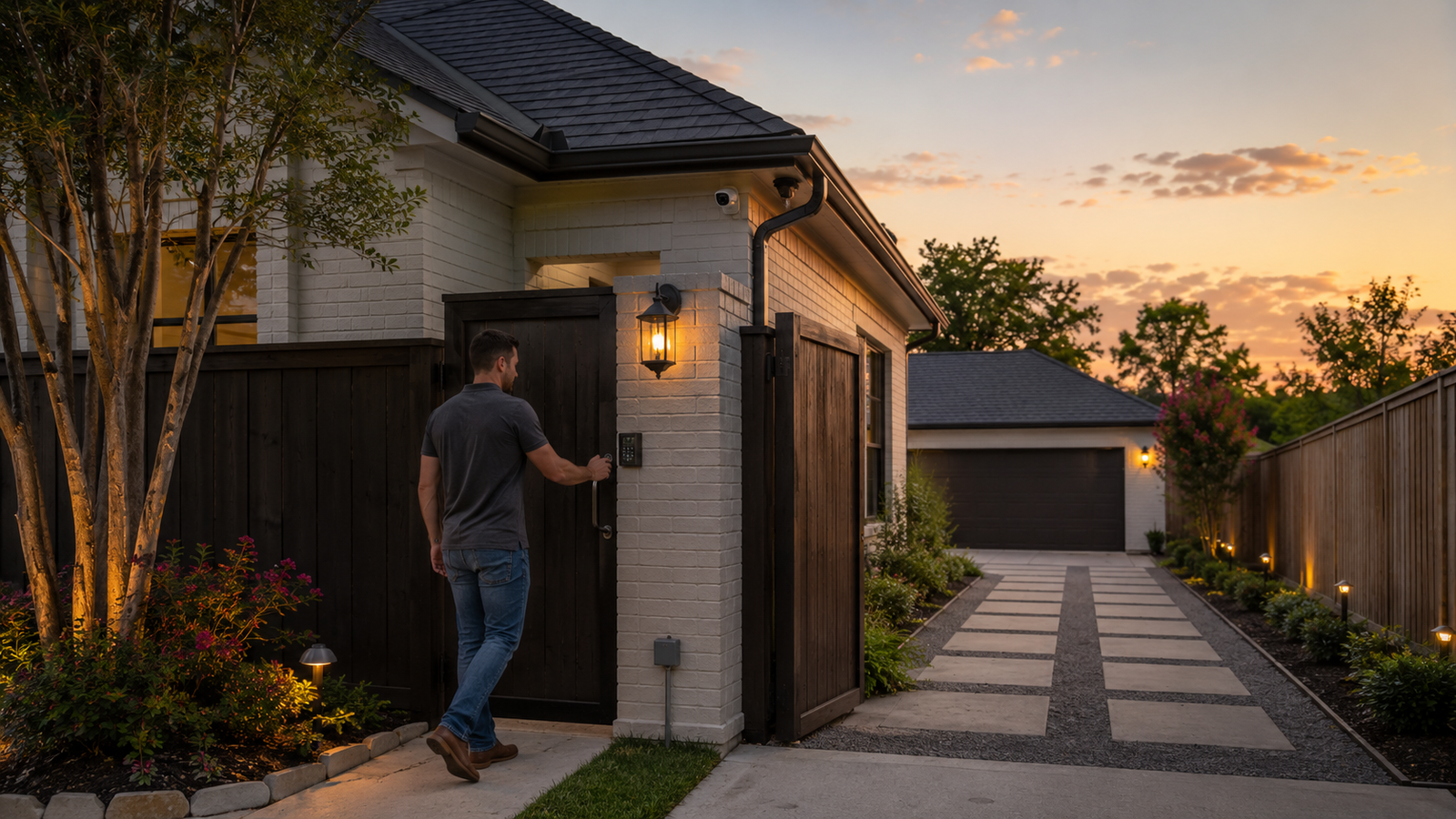
TLDR: If your Katy home has side gates, patio doors, or a detached garage that feels a little too easy to reach, access control can help you manage those entry points without turning your daily routine into a key-fumbling contest. For many homeowners, the real win is simple: fewer loose ends, better visibility, and less guessing about who got in and when.
In Katy neighborhoods like Cinco Ranch and Elyson, we often hear the same frustration from homeowners: the front door feels secure, but the rest of the property tells a different story. Side yards, backyard gates, and garage entries can be the weak spots. That is usually where unwanted visitors, delivery confusion, or just plain bad timing start to become a headache.
Access control gives you a cleaner way to manage those entry points. It is not about making a home feel like a fortress. It is about making the right doors easier to use for the right people, while keeping the wrong ones out.
Why do Katy homes get caught off guard by unwanted visitors?
One pattern we regularly notice is that homeowners focus on the front door and forget how many other ways people can reach the property. Side gates, detached garages, patio entries, and even backyard access points often get less attention during the original build or after move-in.
That matters in Katy because a lot of homes have larger lots, outdoor living spaces, and fenced yards that create more entry decisions than people expect. Once the landscaping is in, the patio is finished, and the family starts using the backyard every day, those overlooked access points are suddenly part of normal life.
What access control actually solves for homeowners
Access control helps you decide who can enter, when they can enter, and how they get in. For a homeowner, that usually means fewer keys floating around, fewer awkward meetups at the gate, and fewer “Who left this unlocked?” moments.
- Keyless entry for gates, doors, or other controlled access points
- Temporary access for guests, service providers, or family members
- Remote control from a phone when plans change at the last minute
- Better coordination with cameras and networked home systems
When the system is planned well, it feels less like a gadget and more like a practical part of the house.
Which entry points matter most?
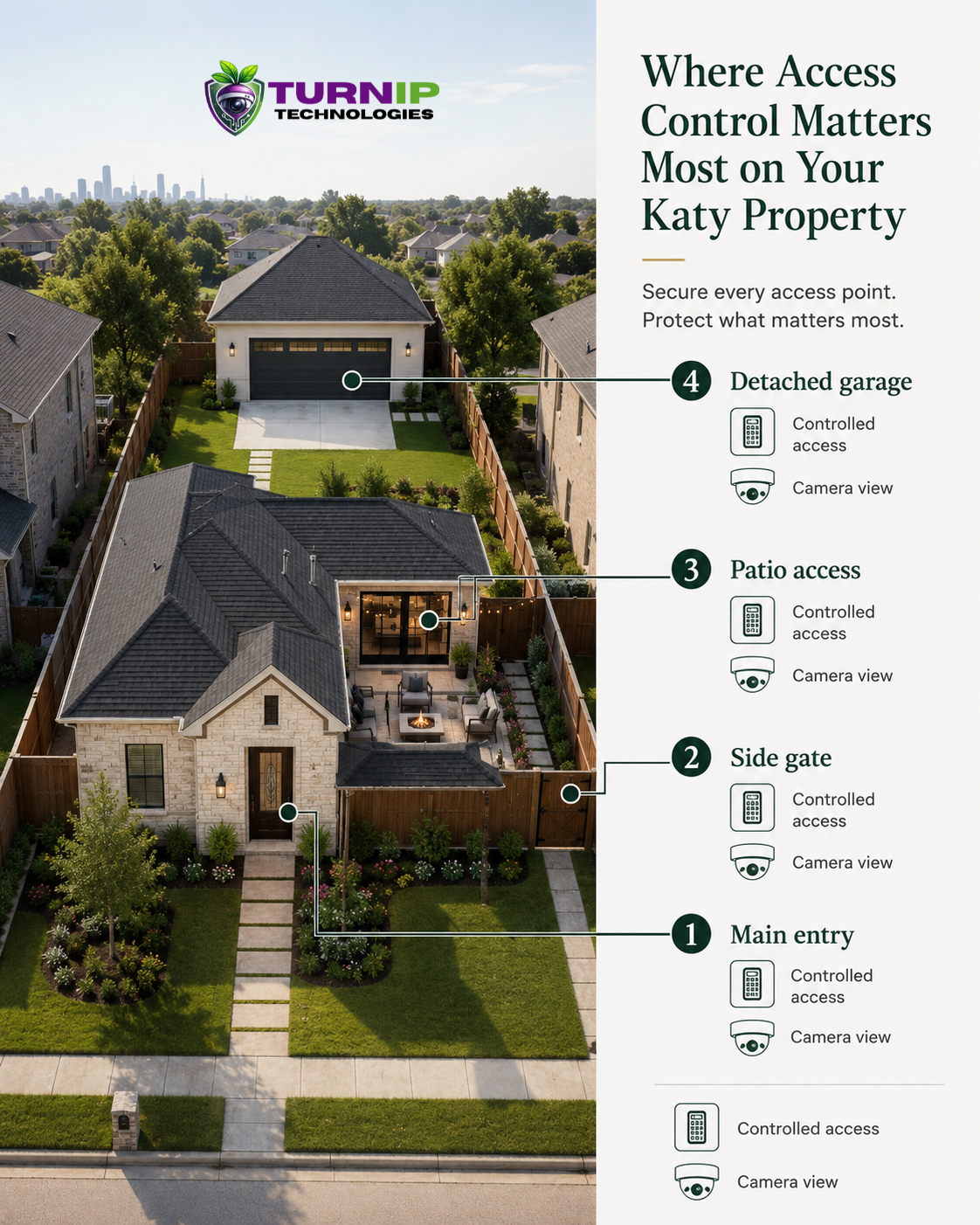
Before choosing equipment, it helps to walk the property the way someone else would. Front door, side gate, garage side door, patio access, backyard gate. That quick exercise usually makes the weak spots obvious.
| Entry point | Why it gets overlooked | Why access control helps |
|---|---|---|
| Side gate | Out of sight, especially after fencing and landscaping | Lets you manage backyard access without relying on a basic latch |
| Detached garage | Often sits far enough from the house that it becomes a separate problem | Creates a more controlled entry for family, tools, or storage access |
| Patio door | Used constantly, but rarely planned as a control point | Helps manage access during gatherings and busy family routines |
| Main front entry | Usually gets the most attention, but not always the best system design | Supports a complete access plan instead of a single locked door |
What homeowners usually get wrong about access control
Many homeowners assume a smart lock on the front door solves the whole problem. It helps, sure, but it does not do much for the side gate, detached garage, or backyard entry that people actually use when the house is busy.
That is where a broader plan matters. A stronger setup can tie together the right entry points, the right users, and the right timing without making the system annoying to live with. If it is annoying, people stop using it correctly. That is how good hardware turns into a very expensive habit.
What we look for during a planning walkthrough
In homes we visit, the best results usually come from planning around the property, not just the device. A keypad on the wrong gate or a reader placed where it gets baked by afternoon sun can create more frustration than convenience.
- Where guests naturally enter the property
- Which gate or door gets the most daily use
- Whether the entry point is exposed to heat, glare, or weather
- How the system will connect to the home network
- Whether the homeowner needs camera visibility at the same location
Houston-area heat and humidity also matter more than people think. Outdoor equipment needs to be placed where it can actually hold up through long summers, not just look good on install day.
How access control fits with the rest of the home
Access control works best when it is part of a larger low-voltage plan. If the network foundation is shaky, even a good system can become frustrating fast. That is why structured wiring and reliable WiFi matter in the background, especially in larger Katy homes with detached garages or long side yards.
For homeowners who want a more complete setup, it often makes sense to think about access control alongside cameras and network planning rather than as a standalone add-on. The goal is simple: fewer blind spots, fewer app headaches, and fewer surprises when someone needs access unexpectedly.
For a local example of how this gets planned around Katy homes, our access control in Katy service is built around the kinds of entry points and outdoor layouts homeowners here actually deal with.
What should you plan before installation?
One mistake we see repeatedly is waiting until after fencing, patio work, or landscaping is finished before thinking about access control. At that point, the clean cable paths are harder to reach and the best mounting spots may already be blocked.
A little planning early on can save a lot of extra work later. If you are already thinking about cameras, outdoor lighting, or a network upgrade, that is usually the right time to map out access points too.
| Planning decision | Why it matters | Best time to decide |
|---|---|---|
| Entry points to secure | Determines how many doors, gates, or readers are needed | Before equipment is selected |
| Power and cable paths | Affects reliability and how clean the install looks | Before finishes are complete |
| Camera placement | Helps verify who used each entry point | During the same planning walkthrough |
| User access rules | Controls who gets in and when | Before the system goes live |
How does access control help during busy Katy seasons?
Summer is usually when the little access problems start showing up. Kids are in and out, guests arrive for backyard gatherings, and service providers seem to all show up at once. That is when a controlled entry system starts earning its keep.
- Let guests in without leaving the kitchen or patio
- Give temporary access to pool or lawn service
- Track who entered and when
- Reduce the odds of a gate being left open by accident
That last one is more common than people like to admit. A gate that “definitely got closed” has a funny way of being open five minutes later.
What makes a system reliable long term?
Reliability usually comes down to the basics: good placement, stable network support, and a setup that matches the way the family actually uses the home. The device itself matters, but the surrounding plan matters just as much.
For connected systems, device security and network hygiene also matter. CISA recommends using strong passwords, keeping devices updated, and turning on security features for connected home technology. NIST also emphasizes managing risk through good configuration and ongoing maintenance, which is a useful reminder for any smart home setup that people expect to work every day. CISA Secure Our World and the NIST Cybersecurity Framework are both solid references for that mindset.
Is access control worth it compared to basic locks?
Basic locks are still part of the equation, but they do not give you the same level of control. If the issue is a single front door, a lock may be enough. If the issue is multiple entry points, family schedules, service access, and outdoor spaces, access control starts to make a lot more sense.
It is especially useful for homeowners who want a cleaner way to manage daily access without juggling spare keys or wondering whether the side gate is latched. In other words, it solves the kind of problem that does not sound huge until you deal with it every week.
Frequently Asked Questions
How secure are access control systems compared to traditional locks?
They can offer much better control because you can manage entry permissions, monitor access, and reduce reliance on physical keys. That said, the system still needs to be installed and configured properly to be effective.
Can access control be added to an existing Katy home?
Yes. Many existing homes can be retrofitted, although the cleanest installs usually happen when the home is still being built or remodeled. Finished walls, fencing, and landscaping can limit the easiest cable paths.
Do access control systems need strong WiFi?
Some parts of the system may rely on the network, especially if you want remote management or app-based control. In larger homes, the real issue is often not the router itself but placement, wiring, and backhaul.
What entry points should Katy homeowners secure first?
Side gates and detached garage access points are often the first places to review, followed by patio entries and the main front door. Those are the spots that tend to get overlooked during the original plan.
What if the power or internet goes out?
That depends on the system design. A well-planned setup may include backup power or local operation options, but remote features can be limited during outages. It is worth discussing those details before installation.
Ready to make your entry points easier to manage?
If your Katy home has a side gate, detached garage, or other access point that feels too easy to reach, a better system can make a real difference. The goal is not more tech for the sake of it. The goal is fewer headaches and a home that feels easier to manage.
Turnip Technologies can help you plan a practical setup that fits your home, your routine, and the way your family actually uses the property. Call 281-984-4800 to schedule a no-pressure consultation.